LMP: St John Passion

LMP: St John Passion
The St John Passion was first performed in the Nicolaikirche in Leipzig on Good Friday in 1724. A year previously, Bach had been appointed Kantor at the Thomaskirche, a post which carried responsibilities for the provision of music at both the town’s major churches. The practice of performing the Passion at Vestpers on Good Friday had its roots in early Christian liturgical practice, the intonation of the passion story was an intrinsic part of the observation of Holy Week. By mediaeval times, the plainsong was shared amongst different voices, creating a dialogue (rather than a mere account) which paved the way for the more dramatic settings which were to follow. In turn, parts were taken by chorus, representing the crowd, or, in Latin, turbae. The motet-passion grew up across Catholic Europe and examples by such stalwarts of Renaissance choral music as Lassus, Byrd and Victoria still survive.
Settings in the vernacular first appeared in the sixteenth century, Johann Walther setting Luther’s translations of the gospels of St John and St Matthew as early as 1530. By the 17th century, passion settings had moved to a new level in which extra text (not taken from scripture) was introduced. The ‘oratorio passion’, which we see in settings by Telemann, Kuhnau and others was the direct antecedent for Bach’s settings, yet, as with his adoption of several other musical structures, Bach significantly adapts and elevates the form, effectively ‘dramatising’ the gospel story through the individual characterisation of both narrative and commentary.
The narrative is taken from chapters 18 and 19 of St John’s Gospel. Bach adds to this two very short sections from the account of St Matthew – Peter’s bitter weeping after his denial, and the earthquake in which the veil of the temple is torn from top to bottom – two moments which are portrayed with some of the most evocative writing in the work, and clearly added to the St John account for their dramatic resonance. The narrative, taken entirely from scripture, is punctuated by texts written by Bach himself (though heavily based on similar texts by Brockes, Postel and other writers of the last 17th and early 18th centuries).
The narrative is sung by the Evangelist (a tenor role) who tells the story as though he were himself the Gospel writer. He sings in recitative style, familiar to those acquainted with 18th century opera and the conventional musical means for conveying large sections of text economically. However, Bach’s recitative is often far from prosaic, the composer regularly taking the opportunity to colour certain passages of text through the shortening and lengthening of notes within a phrase, the use of jagged rhythms (to portray violence), or (as in the account of Peter weeping bitterly) lines of excruciating chromaticism. Jesus and Pilate join the Evangelist for the narrative, along with a number of individuals who are given direct speech by the Gospel writer. The chorus (divided into four conventional parts) assumes the role of the crowd, their contributions often chillingly bloodthirsty, as when Pilate asks ‘Whom seek ye?’ and they respond with the piercing cry ‘Jesus of Nazareth’. Bach’s depiction of the crowd is ingenious, with complex counterpoint weaving rapidly between voices and busy instrumental lines to emphasise the chaos of the baying mob, whilst the searing dissonance of the ‘Crucify’ choruses underlines their malice and presages the agony that is to come for Christ himself.
The commentary – that is to say the non-scriptural text – takes the form of arias and ariosos sung by the soloists, and chorales sung by the choir. In the aria texts, the individual meditates on the events of the Passion, sometimes from the point of view of an outside observer, sometimes identifying with one of the characters (as in the tenor aria ‘Ah my soul’ following Peter’s denial, in which the music suggests the disciple’s state of impassioned shame and regret). The arias are rich in word-painting and religious symbolism, but also contain some of Bach’s most beautiful writing, Obbligato instruments often created duet or trio texture with the singer, as in the soprano aria ‘I follow with gladness’ in which the semiquavers running imitatively between flutes and voice suggest one running after, or following, another. The chorales are the response of the people and often phrased in the first person – ‘Jesu, turn to look on me who persist in sinning’. Again, Bach’s re-harmonisation of what would have been well-known hymn tunes elevates a familiar form to a new level.
In addition to the narrative and commentary that make up the body of text, the whole work is framed by two monumental choruses. The first, ’Lord and master’, with its relentless rhythmic drive, repetitive bass and sense of a gathering storm, suggests the immensity of the story that is to follow; the closing chorus ‘Sleep well’ is a lullaby of extraordinary beauty, rich in motifs symbolising Christ being laid to rest in the tomb. However, unlike the St Matthew Passion the St John Passion does not close with this chorus, but rather with a concluding chorale, signalling hope and redemption.
Scholars are divided over the question of congregational participation in the chorales: some say that the inclusion of such familiar hymns inevitably suggests the involvement of the faithful, others that the complexity of Bach’s settings precludes the possibility. What is certain, however, is that Bach’s soloists would have ‘stepped out’ from the chorus when singing the St John Passion. The very same singer who condemns Christ to death as a member of the chorus could find himself uttering Christ’s own words in the also aria of heart-rending beauty ‘It is fulfilled’, and then seeking forgiveness in the words of one of the beseeching chorales. Bach’s sermon in music shows how each of us might so easily have found ourselves in the bloodthirsty crown and might so easily have denied Jesus as Peter did, but what it also seeks to show us is the transforming and redeeming power of the cross. That it conveys such a message in music of such consummate skill and beauty secures for the St John Passion its place in history as one of the greatest works of art ever conceived, and its place in the hearts of all those who hear its music and its message in the 21st century.
© Mark Williams
Harpischord/director
Thomas Allery
Soloists
Christian Joel
Hugo Herman-Wilson
Nicholas Mulroy
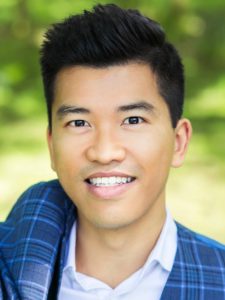
Jacob Ng
Soloists from Trinity School
Alex Bradburn
Michael Mulroy
Leo Jemison
Ruby Little
Oliver Barlow
Violin 1
Ruth Rogers
Jessica Coleman
Nicoline Kraamwinkel
Ann Criscuolo
Violin 2
Gemma Sharples
Anna de Bruin
Aries Chow
Jeremy Metcalfe
Viola
Judith Busbridge
Christine Anderson
Joe Ichinose
Cello
Leo Popplewell
Sarah Butcher
Viola da gamba
Jacob Garside
Double Bass
Catherine Elliott
Flute
Michael Cox
Emilia Zakrzewska
Oboe
Geoff Coates
Max Spiers
Bassoon
Meyrick Alexander
Organ
Matthew Brown
Chief Executive
Chrissy Kinsella
CONCERTS
Projects Director Sophie Haynes
Orchestra Manager & Fixer Jason Weir
Artistic Projects Coordinator Alex Mackinder
DEVELOPMENT
Development Director Tristen Hennigs
Individual Giving & Operations Manager Peter Wright
Fundraising Consultant Paul Hudson
Outreach & Evaluation Consultant Bec Britain
Honorary Chair – Friends of LMP Christine Robson
MARKETING
Marketing & PR Director Anna Bennett
Marketing and Development Coordinator Bethany Penny
Digital Marketing Manager Charles Lewis
EVENTS
Royal Event Manager Rachel Rae
Freelance Events Producer Sophie Branscombe
FINANCE
Bookkeeper Debbie Charles
Leader Debbie Beckerman & Keith Jones
Leader Sophie and Jeffrey Prett
Co-Leader Michael Southwell
Violin 1.3 Liz and Alistair Milliken
Violin 1.4 Peter Harrison
Violin 1.5 Christine Robson
Violin 1.6 Della Brotherston
Violin 1.7 currently not sponsored
Violin 1.8 currently not sponsored
Violin 1.9 currently not sponsored
Associate First Violin currently not sponsored
Principal Second Violin Barbara Maw
Violin 2.2 Mia and Keith Ball
Violin 2.3 currently not sponsored
Violin 2.4 Alastair Fraser
Violin 2.5 currently not sponsored
Violin 2.6 Catherine Shaw – Allbone and Trimit
Associate Second Violin currently not sponsored
Principal Viola Mark and Vanessa Petterson
Co-Principal Viola Stanley Slaughter & Linda Davidson
Viola 3 currently not sponsored
Viola 4 currently not sponsored
Associate Viola currently not sponsored
Principal Cello Anonymous
Sub-Principal Cello Leslie Aarons
Cello 3 Gillian Noble
Cello 4 currently not sponsored
Associate Cello Colin and Helen Snart
Associate Cello
Principal Double Bass John Clarke
Co-Principal Double Bass The Bristow Family
Principal Flute currently not sponsored
Sub-Principal Flute currently not sponsored
Principal Oboe currently not sponsored
Co-Principal Oboe Susan Bulmer
Sub-Principal Oboe Andy Skinner
Principal Clarinet Deirdre Lea
Sub-Principal Clarinet Graham Harman
Principal Bassoon currently not sponsored
Sub Principal-Bassoon Barbara Tower
Principal Horn currently not sponsored
Sub-Principal Horn currently not sponsored
Principal Trumpet Ishani Bhoola
Sub-Principal Trumpet Cynthia Harrod-Eagles
Principal Trombone currently not sponsored
Sub-Principal Trombone currently not sponsored
Principal Bass Trombone currently not sponsored
Principal Timpani Cynthia Harrod-Eagles
Principal Percussion currently not sponsored
Four Seasons across the World: Vivaldi and Piazzolla
Friday 17 April 2026
St. Martin-In-The-Fields
Two famous takes on the world’s seasons are contrasted in this interactive concert, complete with bespoke digital displays to immerse you in the music.
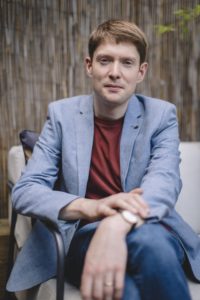
Thomas Allery
harpsichord/director

Thomas Allery enjoys a varied career as a director, organist and early keyboard player. He divides his time between performing, teaching, and research. He is currently director of Music at London’s Temple Church.
Collaboration plays an important part in Thomas’ work. He is in demand as a continuo player with a range of leading ensembles in the field of historical performance and opera. Thomas regularly performs with the orchestra of The Sixteen, and is a founding member of the award-winning period group Ensemble Hesperi, with whom he has toured, recorded and broadcast widely. Hesperi has gained a reputation for its innovative research-led programming, for its pioneering work promoting rarely-heard Scottish eighteenth-century music, and for its dynamic collaborations with guest artists including actors, singers, and dancers.
In 2023, Thomas was appointed as Director of Music at Temple Church, London, renowned for its centuries-long tradition of choral excellence. Here he directs and trains the professional choirs in a busy programme of services and concerts, regularly working with period orchestras and an ambitious programme of commissions from leading composers. Thomas also leads Temple Church’s choral education and outreach programme for young musicians aged 7 to 21, working to widen access to the English choral tradition.
Having originally trained at the University of Oxford, Thomas subsequently studied organ and harpsichord at the Royal College of Music before pursuing an Artist Diploma in harpsichord at the Guildhall School of Music and Drama. Sponsorship from the Eric Thompson Trust enabled him to pursue specialist tuition in early organ techniques with Erwin Wiersinga at the Martinikerk in Groningen and to release a documentary film, ‘Sounds of the Square Mile’ from the City of London in 2023.
Thomas is a professor of basso continuo at London’s Royal College of Music. His passion is in inspiring the next generation of young players in keyboard practice. In his continuo teaching, Thomas helps students to develop fluency in keyboard harmony, stylistic awareness, and chamber music skills, equipping them for a wide variety of roles within the music profession. He draws upon current research in historical music pedagogy, and his own work in this field seeks to shed light on pedagogical approaches of the seventeenth and eighteenth centuries, reshaping these into teaching materials for students today.
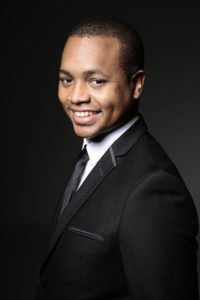
Christian Joel
tenor

Hailing from Trinidad and Tobago, tenor Christian Joel is an up-and-coming artist of great promise. Christian’s recent performances include the title role of Orlando in Handel’s opera with Liberata Collective, ‘Steuermann’ in Wagner’s Der fliegende Holländer with Persona Arts and ‘Count Almaviva’ in Rossini’s Il Barbiere di Siviglia.
Last season he performed ‘Amnon’ in Hagemann’s Ruth with Pegasus Opera Company, and Handel’s Orlando with Liberata Collective at Buxton International Festival. Christian has appeared as ‘Chief Pee-Ay-Sis’ in Will Todd’s Migrations, and ‘Anthony’ (cover) in David Hackbridge Johnson’s Blaze of Glory with Welsh National Opera. Other operatic roles include ‘David’ in John Adams’ I was looking at the ceiling and then I saw the Sky (Opéra de Lyon), ‘Dr Sachs’ in Michael Nyman’s The Man who mistook his wife for a Hat (Theatre Oriental de Vevey), ‘Prince Paul’ (La Grande Duchesse de Gérolstein, Offenbach) with the Lucerne Theatre.
Christian’s recent concert repertory includes Carmina Burana in France, Handel’s Israel in Egypt under the baton of Leonardo García Alarcón, and Mozart’s Requiem at the Herkulessaal, Munich. Christian is also the featured tenor in Google’s ‘Blob Opera’ interactive site.
Following studies at HEMU de Lausanne and the Zurich University of the Arts, he was an artist of the International Opera Studio at Opéra de Lyon during the 2019-2020 season.
Hugo Herman-Wilson
baritone

British baritone Hugo Herman-Wilson is rapidly gaining recognition for his versatile performances in both opera and concert. A former member of the Young Artist Programme of Les Arts Florissants and a Britten-Pears Young Artist, Hugo is also a recipient of the Help Musicians UK Maidment Award. He studied at King’s College, Cambridge and the Royal College of Music.
The 2023/24 season saw Hugo make notable debuts, including the Lucerne, George Enescu, Tanglewood festivals, and the BBC Proms. He also performed at Lincoln Center New York, La Scala Milan, and the Philarmonie de Paris in a production of Purcell’s The Fairy Queen with Les Arts Florissants. This season, Hugo creates the role of Papageno in Damon Albarn’s The Magic Flute II: The Curse at Théâtre du Lido, Paris. Hugo will also perform The Fairy Queen with Vox Luminis in Europe, and with Les Arts Florissants in South America and make his Glyndebourne debut in Monteverdi’s L’Orfeo.
On the concert platform, Hugo has performed a wide range of repertoire, including a programme of Schütz and Praetorius with Jonathan Cohen at Wigmore Hall. He has also appeared at the Aldeburgh Festival and the SmorgasChord Festival, and was an audience prize winner at the Somerset Song Prize. He has performed solos in various Bach Cantatas with the Orchestra of the Age of Enlightenment and appeared at the London Handel Festival.
On the operatic stage, Hugo’s recent and upcoming roles include The Notary in The Sorcerer and Don Basilio in Il Barbiere di Siviglia for Charles Court Opera, as well as covering Monsieur Presto in Les Mamelles de Tirésias and The Notary in Don Pasquale for Glyndebourne Opera. He has also covered Bartolo in Il Barbiere di Siviglia and Krusina in The Bartered Bride for Garsington Opera, and performed Dottore Grenvil in La Traviata for Nevill Holt and Oxford Opera.
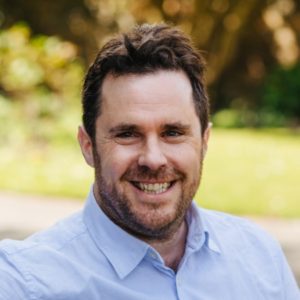
Nicholas Mulroy
evangelist (tenor)
Born in Liverpool, Nicholas Mulroy read Modern Languages at Cambridge before postgraduate studies at Royal Academy of Music. He has appeared with many of the world’s leading ensembles, and has enjoyed many different approaches to music-making.
He is particularly noted for his lyrical and narrative interpretation of Bach’s music. Singing from memory, his performances as the Evangelist in the St Matthew Passions have been widely praised and was described by The Times as “a thing of wonder… Every phrase, every word was turned over carefully so as to heighten the storytelling.” Working with leading conductors and ensembles worldwide his highlights have included performances of the passions at the BBC Proms, Sydney Opera House and Bach’s two churches in Leipzig – the Thomaskirche and the Nikolaikirche.
Nicholas Mulroy has frequently sung with many leading early music ensembles, including a long association with John Butt and the Dunedin Consort. He has also worked regularly with the Gabrieli Consort, Monteverdi Choir, Concerto Copenhagen, Le Concert d’Astrée, Academy of Ancient Music, Orchestra of the Age of Enlightenment, Le Concert des Nations, Les Musiciens du Louvre, International Bachakademie Stuttgart and Handel and Haydn Society Boston. Other major orchestras he has appeared with include Royal Liverpool Philharmonic, Concertgebouworkest, St Paul Chamber Orchestra, Antwerp and Melbourne symphonies, Brussels and Copenhagen philharmonics, Royal Northern Sinfonia, Britten Sinfonia and Australian Chamber Orchestra.
He is devoted to recital repertoire, and has appeared regularly at the Wigmore Hall, in a wide range of music from Purcell’s Harmonia Sacra with regular collaborator Elizabeth Kenny, to songs by Schubert, Stephen Hough, and the complete Britten Canticles. He has also appeared frequently at the Lammermuir Festival and at the Bath, Ludlow, Maribor, St Magnus, and BRQ Festivals. His ongoing collaboration with guitarist/theorbist Toby Carr explores a rare combination of music from two golden ages – 17th-century Europe and 20th Century Latin America and will be released on disc in 2024.
His extensive discography includes music across seven centuries, including the St Matthew Passion and a Gramophone Award-winning Messiah with Dunedin Consort. He has made three recordings of the St John Passion (Dunedin Consort, Concerto Copenhagen and Polyphony/OAE) and five of the Monteverdi Vespers of 1610. Away from the baroque he has recorded Stravinsky with Scottish Chamber Orchestra and Piazzolla’s María de Buenos Aires with Mr McFall’s Chamber.
In recent years, Nicholas Mulroy has enjoyed success in directing, including several choral programmes, as well as Bach’s St Matthew Passion at Wigmore Hall and a curated programme of Bach, Purcell and Latin American music with Aurora Orchestra. In 2020, he was appointed Associate Director of the Dunedin Consort.
He is Director of the Trinity Boys Choir, as well as Associate Director of the Dunedin Consort, a Visiting Professor at the Royal Academy of Music, and a Musician in Residence at Girton College, Cambridge.
Jacob Ng
bass-baritone

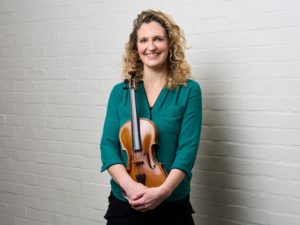
Ruth Rogers
leader

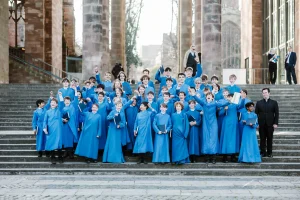
Trinity Boys and Girls Choirs

Trinity Boys Choir & Trinity Girls Choir is a combination of the choirs at Trinity School, Croydon. The combined choir have been involved in projects including two screenings of Titanic as part of the Royal Albert Hall’s Films in Concert series and recording a track with the American pop singer Caroline Polachek. The Trinity Boys Choir has enjoyed a high professional profile, both at home and abroad for over fifty years. In the world of opera, the choir has performed at Glyndebourne, the Royal Opera House, Covent Garden, English National Opera and various opera houses abroad, including La Monnaie, Brussels, La Scala, Milan, La Fenice, Venice, and at the Aix-en-Provence Festival. The choir frequently performs at the BBC Proms and alongside the world’s top orchestras. The choir can be heard on the soundtracks of numerous feature films including Maleficent, The Hunger Games: Mockingjay Part I and Part 2, San Andreas and Fantastic Beasts and Where to Find Them.