
LMP: Haydn and Mozart

LMP: Haydn and Mozart
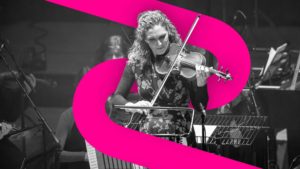
Martines is the first known female composer to write a symphony. This is her only surviving symphonic work but it is likely she wrote others, just as it is also likely that other female composers wrote symphonies at the around the same time or earlier which have not been preserved. In an era that often resisted women taking a public role in any profession, Martines, who lived in Vienna and counted Haydn and Mozart as colleagues, managed to tread a fine line in being accepted and acclaimed as a musician. She was the first woman inducted into the illustrious Accademia filarmonica of Bologna, and was evidently an extremely accomplished singer and harpsichord player. Charles Burney (who called Stamitz’s orchestra in Mannheim an ‘army of generals’) wrote that her performance of her own songs ‘surpassed all that I had been made to expect’.
Other women composers in Vienna (notably Coccia) were subject to a public backlash against their professional careers but three factors most probably helped Martines to prevail: 1) her many professional connections partly made through performing at and hosting musical soirees 2) the support of her mentor Metastasio (who wrote opera librettos for Mozart among others) 3) careful management of her public persona by portraying herself as a dilettante and publishing her lighter works rather than her more learned ones.
Martines initially titled this work as an Overture and it is a clear example of how the origins of the symphony lie in Italian opera, which often opened with a sequence of fast-slow-fast movements in binary form. Overall the sinfonia is clearly in the Galant style, in particular its elegant middle movement and the lively finale. The first movement, however, is full of dramatic gestures and contrasts (perhaps reflecting Martines background as primarily a vocal composer) that is comparable to the dramatic style of C.P.E. Bach.
© Tom Pankhurst
I Allegro
II Adagio
III Allegro assai
Between 1782 and 1786 Mozart composed no less than fourteen piano concertos, most of them intended for his own use. These were the years of his successful Academies (subscription concerts), when the Viennese flocked to see and hear Mozart perform his own compositions on the keyboard. The Emperor Joseph II came to some of these concerts, and his praise of one work assured the success of the next. Since the Academies were so well received and Mozart was at last paid reasonable fees, he could hardly be blamed for being optimistic about his future. He felt that he was now established and so could permit himself a greater freedom of expression. The result was that he began to pay less attention to popular taste and his piano concertos gained in depth to such an extent that they soon proved quite beyond his contemporary listeners. The harder he tried to impress them with daring modulations, rich sonorities and a great wealth of thematic material, the more it became evident that audiences in Vienna had lost interest in Mozart, at least as a pianist-composer, and that he was unable to regain their favour in this field. After the A major Concerto, K488, he composed only two more (K491 and K503) for these concerts and only a few months later he was unable to find more than a single name for his subscription lists. The days of the successful Academies had gone for ever.
In March 1786, while Mozart was working on the score of his opera The Marriage of Figaro, he completed the Piano Concerto K488, as well as K491, in less than 4 weeks. Both works are, however, far from being occasional compositions and show no signs of haste. The score of this Piano Concerto in A is carefully worked out and the many themes are integrated with skill and ingenuity in the classical forms of the outer movements. These, the first Allegro and the Allegro assai, are on the whole cheerful pieces, though both have their serious moments, especially when the development of the themes leads unexpectedly to remote harmonic regions and dark tonalities.
The Adagio is Mozart’s only movement in the key of F sharp minor and here the mood is one of sadness and resignation – though without a trace of sentimentality or self-pity. In this Adagio, as indeed in the whole concerto, the pianist is supported by eloquent solos from the woodwind. The colour of the harmonic texture is exceptionally soft and warm throughout because the strings are joined only by those members of the wind that produce a particularly mellow sound: flute, clarinets, bassoons and horns.
© Stefan de Haan
A pioneer, polymath, and one of the most remarkable figures of the 18th century, Joseph Bologne, Chevalier de Saint-Georges’s career trajectory spanned humble beginnings on a plantation in Guadalupe to regularly performing in duet with Marie Antoinette, Queen of France. An accomplished swordsman, swimmer, dancer, composer and violinist, Saint-Georges attained stature and influence such as had been never achieved by a musician of African descent. Even when faced with prejudice and career setbacks, his compositions demonstrate a refinement of style and substance that made his success in French court circles all the more evident.
The three movements of Saint-Georges’s Symphony No. 2 comprises a re-formulation of the overture to the composer’s opera L’Amant Anonyme (“The Anonymous Lover”). Central are two stylistic themes; one of the brilliant, sprightly instrument style cultivated by the Mannheim School of symphonists, and the other the tuneful, voice-like melodic invention found in arias and other operatic writing of the era. Scored for modest orchestra forces (strings, oboes, and horns), the symphony opens with energetic fanfares that map out the movement’s tonal center. Contrasting these by-now-established initial structures are graceful passages for strings that trip about daintily and offer a respite from the brash utterances that continuously reappear. The Andante movement opens with scenes from a measured, stately minuet in ¾ time; the signature dance of European nobility in the mid-18th century. Saint-Georges adds a degree of complexity by opting for his supporting string forces to enter in sequence, an effect that resembles the canonic writing of the baroque masters. Torrid, driving momentum characterizes the writing of the finale; here, Saint-Georges utilizes devices that would become a recognizable feature of the later Classicists, namely Mozart and Salieri: upper strings outlining suspended closing cadences while lower strings rush upwards in driving, insistent passages.
© Kemper Edwards
I Allegro spiritoso
II Andante
III Minuetto
IV Finale: vivace
Despite Haydn’s singular seclusion at Eszterháza, by the early 1770s his music had spread far and wide across Europe, to places as distant from Austro-Hungary as Spain and England. Parisians in particular took Haydn’s music to their hearts as shown by the large number of local publications of his works, with as many by other composers passed off under his name. Haydn therefore particularly favoured Paris when responding for commissions from abroad; the most important of these resulted in the six so-called ‘Paris’ symphonies, numbers 82 to 87.
Concert life in Paris during the eighteenth century (and indeed later) was organised by various societies that ran orchestras, staged musical events and even held competitions. The best known of them was the Concert Spirituel, but the most significant in terms of Haydn’s symphonies was the Concert de la Loge Olympique, based in the theatre-like surroundings of the Salle de Spectacle de la Société Olympique. Founded in 1769 as the Concert des Amateurs with the Belgian-born composer François Gossec as its conductor, the Loge Olympique, as it was renamed in 1780, was run by a group of Freemasons.
Principal among them was one of the most important late-eighteenth-century Parisian musical patrons, Claude-François-Marie Rigoley, Comte d’Ogny (1757-1790). It was
at his instigation that in about 1784 the Loge Olympique commissioned six symphonies from Haydn (he later also commissioned numbers 90, 91 and 92).
Haydn’s native inventiveness is revealed in the counterpoint between the earnest G minor opening and the naive humour of his ‘clucking’, major-key second subject, from which the symphony derives its nickname, The Hen. It is in fact a work in which the major key comes to dominate: the first movement itself is brought to a close in a triumphant G major.
The Andante is in E flat and is a movement full of dramatic dynamic contrasts. The following Minuetto and Trio are both in G, and so is the lively finale with its continuous, busy quaver movement of a sprightly galop.
© Elizabeth Boulton
Violin 1
Simon Blendis
Jessica Coleman
Nicoline Kraamwinkel
Anna de Bruin
Ronald Long
Julia Loucks
Violin 2
Gemma Sharples
Elise Scheurer
Jeremy Metcalfe
Nemanja Ljubinkovic
Melanie Gruwez
Viola
Judith Busbridge
Christopher Beckett
Christopher Pitsillides
Claire Newton
Cello
Ella Rundle
Sarah Butcher
Leo Popplewell
Double Bass
Benjamin Russell
Catherine Elliott
Flute
Thomas Hancox
Oboe
Gareth Hulse
Katie Clemmow
Clarinet
Tim Lines
Lewis Graham
Bassoon
Sarah Burnett
Emma Harding
Horn
Timothy Ellis
Martin Grainger
Chief Executive
Chrissy Kinsella
CONCERTS
Projects Director Sophie Haynes
Orchestra Manager & Fixer Jason Weir
Artistic Projects Coordinator Alex Mackinder
DEVELOPMENT
Development Director Tristen Hennigs
Individual Giving & Operations Manager Peter Wright
Fundraising Consultant Paul Hudson
Outreach & Evaluation Consultant Bec Britain
Honorary Chair – Friends of LMP Christine Robson
MARKETING
Marketing & PR Director Anna Bennett
Marketing and Development Coordinator Bethany Penny
Digital Marketing Manager Charles Lewis
EVENTS
Royal Event Manager Rachel Rae
Freelance Events Producer Sophie Branscombe
FINANCE
Bookkeeper Debbie Charles
Leader Debbie Beckerman & Keith Jones
Leader Sophie and Jeffrey Prett
Co-Leader Michael Southwell
Violin 1.3 Liz and Alistair Milliken
Violin 1.4 Peter Harrison
Violin 1.5 Christine Robson
Violin 1.6 Della Brotherston
Violin 1.7 currently not sponsored
Violin 1.8 currently not sponsored
Violin 1.9 currently not sponsored
Associate First Violin currently not sponsored
Principal Second Violin Barbara Maw
Violin 2.2 Mia and Keith Ball
Violin 2.3 currently not sponsored
Violin 2.4 Alastair Fraser
Violin 2.5 currently not sponsored
Violin 2.6 Catherine Shaw – Allbone and Trimit
Associate Second Violin currently not sponsored
Principal Viola Mark and Vanessa Petterson
Co-Principal Viola Stanley Slaughter & Linda Davidson
Viola 3 currently not sponsored
Viola 4 currently not sponsored
Associate Viola currently not sponsored
Principal Cello Anonymous
Sub-Principal Cello Leslie Aarons
Cello 3 Gillian Noble
Cello 4 currently not sponsored
Associate Cello Colin and Helen Snart
Associate Cello
Principal Double Bass John Clarke
Co-Principal Double Bass The Bristow Family
Principal Flute currently not sponsored
Sub-Principal Flute currently not sponsored
Principal Oboe currently not sponsored
Co-Principal Oboe Susan Bulmer
Sub-Principal Oboe Andy Skinner
Principal Clarinet Deirdre Lea
Sub-Principal Clarinet Graham Harman
Principal Bassoon currently not sponsored
Sub Principal-Bassoon Barbara Tower
Principal Horn currently not sponsored
Sub-Principal Horn currently not sponsored
Principal Trumpet Ishani Bhoola
Sub-Principal Trumpet Cynthia Harrod-Eagles
Principal Trombone currently not sponsored
Sub-Principal Trombone currently not sponsored
Principal Bass Trombone currently not sponsored
Principal Timpani Cynthia Harrod-Eagles
Principal Percussion currently not sponsored
Four Seasons across the World: Vivaldi and Piazzolla
Friday 17 April 2026
St. Martin-In-The-Fields
Two famous takes on the world’s seasons are contrasted in this interactive concert, complete with bespoke digital displays to immerse you in the music.
Cédric Tiberghien
piano
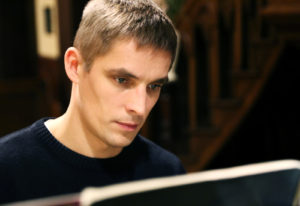
Cédric Tiberghien is a French pianist who has established a truly international career. He has been particularly applauded for his versatility, as demonstrated by his wide-ranging repertoire, interesting programming, an openness to explore innovative concert formats and his dynamic chamber music partnerships.
The 2025/26 season sees Cédric Tiberghien perform with Netherlands Radio Philharmonic, Warsaw Philharmonic, Trondheim Symphony, Antwerp Symphony, Bournemouth Symphony and Boulez Ensemble, working with Karina Canellakis, Thomas Guggeis, Nuno Coelho and Ruth Reinhardt among others. He also gives recitals and chamber concerts in London, Paris, Madrid, Geneva and Milan, including lieder with Stéphane Degout and Beethoven’s sonatas for piano and violin on period instruments with Alina Ibragimova.
Highlights of the previous three seasons include concertos with Berliner Philharmoniker, San Francisco Symphony, London Philharmonic Orchestra, Washington’s National Symphony, Orchestre symphonique de Montréal, Atlanta Symphony, Sydney Symphony, Pittsburgh Symphony, Mahler Chamber Orchestra, Houston Symphony, Rundfunk-Sinfonieorchester Berlin, Orchestre National de France and Orchestre National de Lyon, with conductors Cristian Măcelaru, Simone Young, Matthias Pintscher, Rafael Payare, Thierry Fischer and Stéphane Denève.
Cédric is especially known for his interpretations of classical, French and contemporary repertoire. He recently completed his three-season traversal of Beethoven’s complete variations for piano for Wigmore Hall and Harmonia Mundi, while his period instrument recording of Ravel’s Piano Concertos with François-Xavier Roth and Les Siècles was shortlisted for a 2023 Gramophone Award. That same year saw his first collaboration with sound artist Matthias Schack-Arnott on The John Cage Project – a reimagining of the Sonatas and Interludes featuring a kinetic sound sculpture. Having been performed across Australia to critical acclaim, the project comes to Europe in 2026/27.
Jonathan Bloxham
principal conductor and artistic advisor
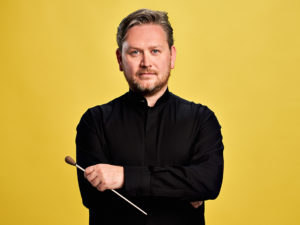
This season will be Bloxham’s second year as Chief Conductor of the Nordwestdeutsche Philharmonie following in the footsteps of Andris Nelsons and Jonothan Heyward. Last season he led them on two national tours and in their subscription series in Herford, with two further tours planned for this season. In 2021 he recorded a CD of Strauss and Franck with the orchestra, described as “irresistible” by Musicweb International.
The 2025/26 season will also mark Bloxham’s first as Principal Conductor of the London Mozart Players, building on his long-standing relationship with the ensemble, which he has served as Resident Conductor and Artistic Advisor since 2022. Season highlights include Mozart, Master of Drama, the opening concert at St Martin-in-the-Fields with Danielle De Niese, and Samuel Coleridge-Taylor, a celebratory performance at Fairfield Halls marking the 150th anniversary of the Croydon-born composer. Bloxham also leads the orchestra in the world premieres of works by Anna Clyne, Stephen McNeff, Tunde Jegede and Ryan Morgan.
Guest highlights of the past couple of seasons have included London Philharmonic, NDR Elbphilharmonie, Tokyo Symphony, Salzburg Mozarteumorchester, Halle Orchestra, BBC Symphony, BBC Philharmonic, Belgian National, Residentie Orkest, Tonkuenstlerorchester Wien at the Grafenegg Festival, Bonn Beethovenorchester, Trondheim Symphony and Philharmonic Brass (musicians from Berlin and Vienna Philharmonic orchestras) – many of these on multiple occasions. This season he conducts the Antwerp Symphony Orchestra, Ulster Orchestra, Bremer Philharmoniker, and the Royal Liverpool Philharmonic with two programmes.
In 2024 Bloxham released a recording of Bach’s Keyboard Concertos with the Academy of St Martin in the Fields and Tianqi Du, which reached number one on the Apple Classical Top 100 global chart. He has also recorded works by Bruce Broughton with the London Symphony Orchestra (2024), as well as discs for future release with the BBC Scottish Symphony (2022) and London Mozart Players (2023).
Bloxham’s conducting career began in 2016 when he became Assistant Conductor of the City of Birmingham Symphony Orchestra under Mirga Gražinytė-Tyla. Prior to conducting, he enjoyed a successful career as a cellist, performing across Europe and making his concerto debut at the Berlin Philharmonie in 2012. He studied at the Yehudi Menuhin School, the Royal College of Music, and the Guildhall School of Music and Drama, and later trained in conducting with Sian Edwards, Michael Seal, Nicolas Pasquet, and Paavo Järvi. For the past 16 years Bloxham has been Artistic Director of the annual Northern Chords Festival in Newcastle-upon-Tyne.
Simon Blendis
leader
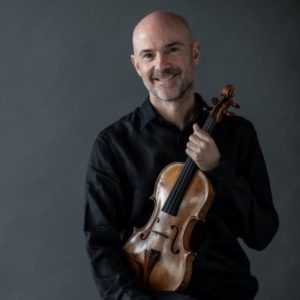
Simon Blendis enjoys a varied career as a chamber musician, soloist and orchestra leader. He was a member of the Schubert Ensemble for twenty-three years, with whom he has performed in over thirty different countries, recorded over twenty CDs, made frequent broadcasts for BBC Radio 3 and appeared regularly at Europe’s major venues.
In 2014 Simon was appointed leader of the London Mozart Players, and since 1999 has been one of the leaders of Orchestra Ensemble Kanazawa in Japan, with whom he has recorded Vivaldi’s Four Seasons for the Warner label. He is also in demand as a guest-leader and guest-director and has appeared in this role with most of the UK’s major orchestras. As a soloist he has made recent appearances with the Philharmonia Orchestra, the Academy of St. Martin-in-the-Fields, the Royal Philharmonic Orchestra and the City of Birmingham Symphony Orchestra.
Simon is a keen exponent of new music. He has given over 50 first performances and has had new works written for him by, amongst others, John Woolrich, Tansy Davies and jazz legend Dave Brubeck.
Simon is increasingly sought after as a teacher and is Professor of Violin at Guildhall School of Music and Drama.
